ServicesPool Drain and Refill
Pool Drain and Refill in Coolidge
Some water can't be fixed with more chemicals. We drain it, look over the empty shell, and refill with fresh water balanced from day one. We plan each drain around what your pool is made of, because plaster, pebble, fiberglass and vinyl don't handle being empty the same way.
When Fresh Water Is the Real Fix
Every time the sun takes water out of your pool, the minerals stay behind. You top off with more hard water, and the calcium and dissolved solids keep climbing. After a few years the numbers get so high that chlorine works poorly, scale builds on the tile line, and balancing the water turns into a weekly fight.
A drain and refill resets all of that. It's not something a pool needs often. For most pools in Coolidge and the towns around it, every few years is about right, depending on how hard the fill water is and how much you top off in summer.
The part people don't expect is that the empty pool is the risky part. A plaster pool left dry in the heat can crack or craze. A fiberglass shell can shift if groundwater pushes up on it. A vinyl liner can shrink and pull loose. That's why we start with the surface, not the pump.
What the Job Includes
Water testing first
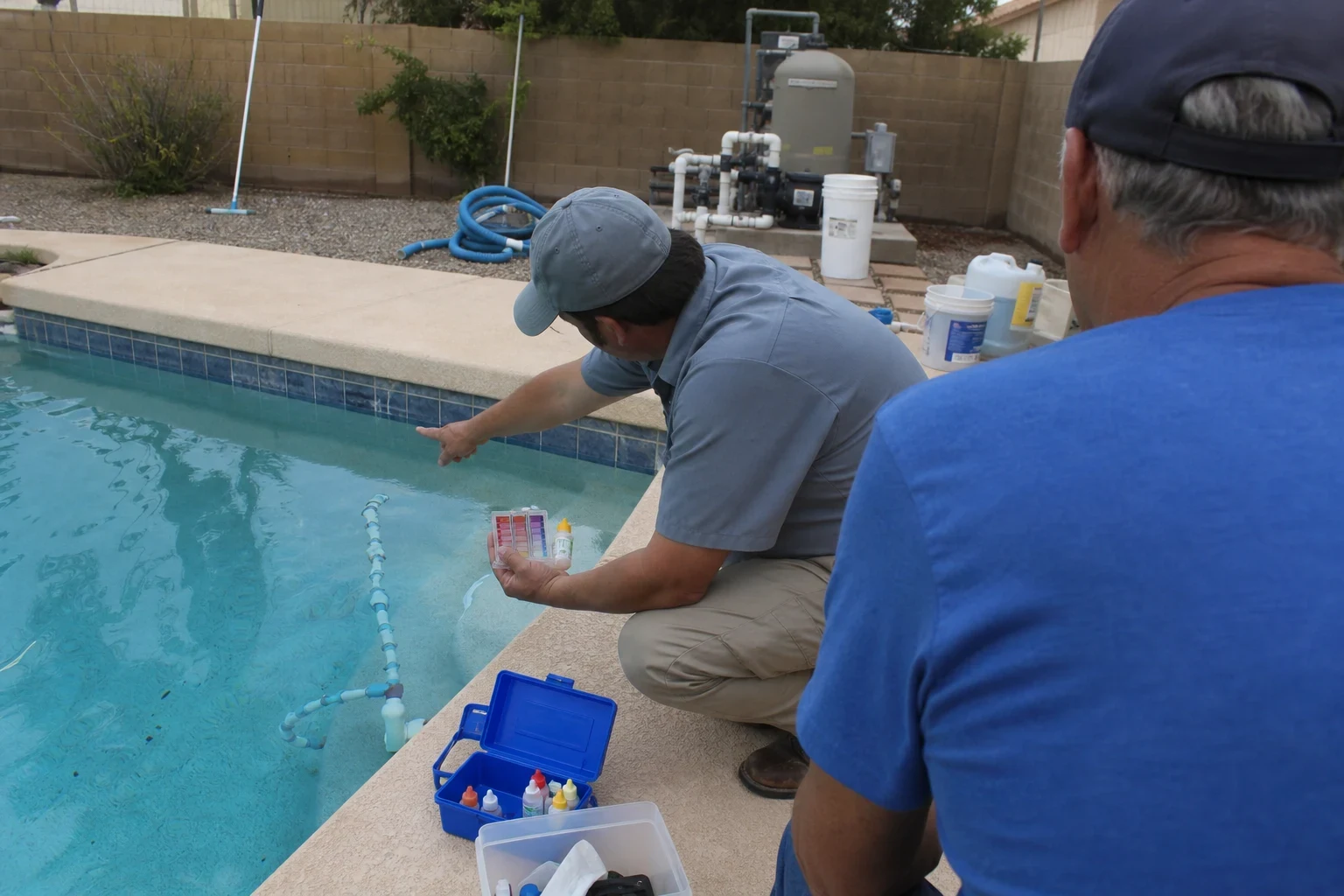
We test calcium hardness, total dissolved solids and cyanuric acid before we pump anything. If a partial drain will bring the numbers back in line, we tell you that instead.
A drain plan for your surface
Plaster and pebble pools get drained and refilled quickly so the finish isn't sitting dry in the sun. Fiberglass pools get extra care around groundwater. Vinyl liner pools usually get a partial drain only, since a fully empty liner can shrink and won't always go back.
Controlled pumping
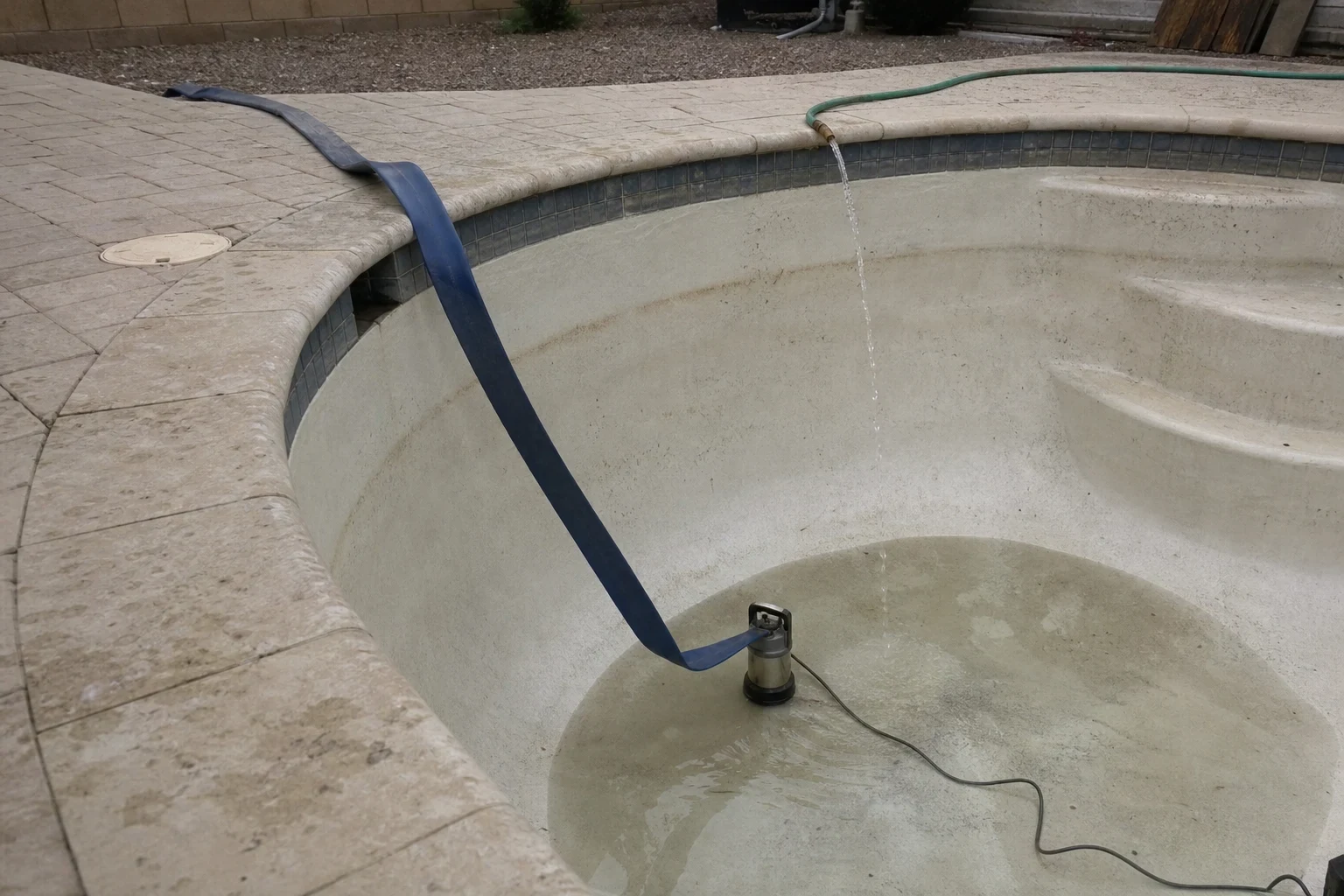
We use a submersible pump and run the discharge where local rules allow it, usually a sewer cleanout at your home rather than the street. We watch the pump the whole time it runs.
A look at the empty shell
With the water out, we check for cracks, loose tile, rough spots, stains and worn fittings. You get photos of anything we find, and we tell you plainly whether it needs attention now or can wait.
Refill and start-up chemistry
We refill and balance the new water for pH, alkalinity, calcium and stabilizer, then restart the equipment and check it runs right.
Signs Your Pool Needs a Drain and Refill
- Chemicals stop working
- You add chlorine and it disappears, or the water stays dull no matter what. High dissolved solids are often the reason.
- White crust on the tile line
- Scale that comes back fast after cleaning means the water is loaded with calcium. Calcium removal and tile cleaning helps, but the water will keep putting it back.
- High stabilizer readings
- Cyanuric acid builds up from stabilized chlorine tablets and doesn't break down. Once it's too high, dilution is the only real fix.
- Cloudy water that won't clear
- If the filter is clean and the chemistry looks right on paper but the water stays hazy, old water may be the cause.
- You're planning surface work
- An acid wash or plaster repair needs an empty pool anyway, so it makes sense to pair them.
How the Day Goes
- 1
Check the weather and the pool
We schedule drains for cooler days when we can, since a dry plaster shell in summer heat is asking for trouble. We open the hydrostatic relief valve where the pool has one, to keep groundwater pressure off the shell.
- 2
Drain
The pump runs until the pool is empty or down to the level we agreed on. Equipment is switched off so nothing runs dry.
- 3
Inspect and clean
We walk the empty pool, take photos, and clean out debris left on the floor. If you booked an acid wash or tile work, it happens now.
- 4
Refill
We start the fill from your hose as soon as the shell is ready. Filling usually takes the rest of the day and often into the night, depending on pool size and water pressure.
- 5
Balance and restart
Once it's full, we balance the water, restart the pump and filter, and check for leaks at the equipment pad. We come back to recheck the chemistry over the next few days.
What Moves the Price
Every pool is a little different, so we quote after we see it and test the water. The quote is written out line by line. Water to refill comes off your home's meter, so that cost shows on your water bill, not ours.
- Pool size
- More gallons means longer pumping, a longer fill and more start-up chemicals.
- Surface type
- Plaster, pebble, fiberglass and vinyl each need different handling. A vinyl partial drain is a different job than a full plaster drain.
- Work done while it's empty
- An acid wash, tile cleaning or a small repair adds time but saves draining again later.
- Discharge setup
- Where the cleanout sits and how far the hose has to run can change setup time.
Drain and Refill Questions
- How often should I drain my pool?
- Most pools here need it every few years, not every year. It depends on your fill water and how much you top off. We go by test results, not the calendar.
- Can my fiberglass pool be drained?
- Yes, but carefully. Fiberglass is light, and groundwater can push it up if it sits empty too long. We keep the empty time short and refill right away.
- Do vinyl liner pools get fully drained?
- Usually not. A liner that dries out can shrink and may not stretch back into place. We lower the water partway and refill, which still brings the numbers down.
- What time of year is best?
- Fall through spring is best. Summer heat is hard on an empty plaster or pebble finish, so we avoid draining in the hottest weeks.
- Will you find problems while the pool is empty?
- If there are cracks, loose tile or worn fittings, we'll see them and show you photos. We'll give you an honest answer on whether it needs pool repair now or can wait.
Ready for Fresh Water?
Tell us your pool type and what the water's been doing. We'll test it, explain the options for your surface, and give you a price before any work starts.