ServicesEquipment Installation
Pool Equipment Installation in Coolidge
We install pool pumps, filters, heaters and salt systems, and we explain the options before you pay for one. You'll know what each type costs to run, what upkeep it needs and why we picked it for your pool.
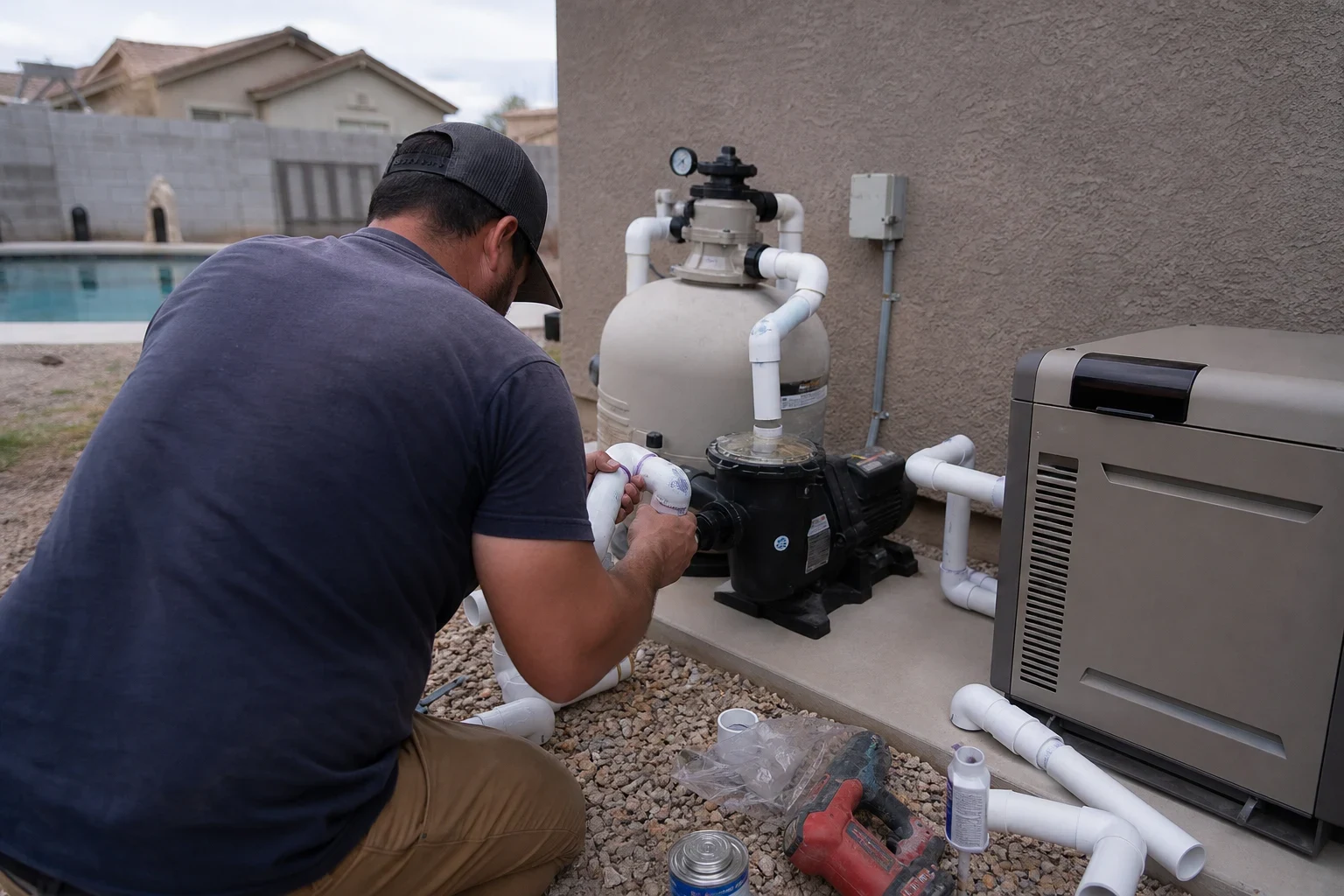
New equipment, picked for how you use your pool
When a pump starts grinding or a filter tank cracks, the part usually has to go. We take out the old unit, put in the new one and redo the plumbing that ties it together. Before we order anything, we go over the choices with you so nothing on the bill is a surprise.
Most of the decision comes down to materials and how they hold up. A sand filter is cheap and simple but lets finer dirt through. A cartridge filter catches more and wastes less water, but the pleats need hosing off. A DE filter gets the water clearest, and the powder takes more care. Pumps split the same way. A single-speed motor costs less up front. A variable-speed pump runs slower and quieter most of the day and uses a lot less power.
In a long Coolidge summer your pump runs a lot of hours, so what it costs to run matters as much as the price tag. If your old unit is worth fixing instead, we'll say so and handle it as pool repair.
What we install
Pumps
Single-speed and variable-speed pumps, sized to your pipe and filter. A pump that's too big for the plumbing just wastes power and wears out seals faster.
Filters
Sand, cartridge and DE filters. Today's tanks are molded composite that won't rust, and we match the filter area to the pump so pressure stays where it should.
Heaters and heat pumps
Gas heaters warm the water fast and work in any weather. Heat pumps cost less to run but heat slower and lose ground on cold nights. We help you pick based on when you actually swim.
Salt chlorine systems
Salt cells use coated titanium plates, and hard water leaves scale on them. We install the cell and control box and show you how to check and rinse the plates.
Plumbing and valves
We plumb with Schedule 40 PVC, primer and glue, and add unions where they make sense. Unions let the next swap come apart with a wrench instead of a saw.
Hookup and start-up
We connect to your existing equipment circuit and timer and check that the bonding wire is attached. If the circuit needs new wiring, we tell you before work starts.
Signs it's time for new equipment
A loud, grinding pump
Screeching or grinding usually means worn motor bearings. You can replace the bearings, but on an older motor a new pump often makes more sense.
Motor hums but won't start
A humming motor that won't spin, or one that trips the breaker, has a failing capacitor or a burned winding. We'll tell you which one it is.
Cracked or leaking filter tank
Water at the band clamp or a hairline crack in the tank is a safety issue under pressure. That tank needs to come off the pad.
Heater won't fire
Repeat error codes, rust inside the cabinet or a burner that lights and shuts off are common once a heater has some years on it.
High pressure after a clean
If the gauge climbs right after the filter was cleaned, the media may be worn out or the filter may be too small for the pump. Filter cleaning won't fix that.
How an install goes
- 1
Quote by phone
You tell us what's on your pad and what it's doing. We give you a free quote and, if needed, come look at the equipment and plumbing first.
- 2
Pick the equipment
We lay out two or three options with the trade-offs in plain words: up-front cost, running cost and upkeep. You choose, and we order the parts.
- 3
Install day
We shut off power, drain the lines and pull the old unit. New equipment goes in with fresh glue joints, and we let the glue set before the system sees pressure.
- 4
Start-up and walkthrough
We prime the pump, check every joint for leaks and set run times. Then we show you the new controls and haul the old equipment away.
What moves the price
The equipment itself is the biggest part of the bill, and the type you choose matters more than the brand. Labor depends on how much of the pad has to change. We give you a line-by-line quote so you can see where the money goes.
- Type of equipment
- A variable-speed pump costs more than a single-speed. A DE filter costs more than sand. Heat pumps and gas heaters are priced very differently.
- Size of the pool
- Bigger pools need more filter area and more pump. Bigger heaters cost more too.
- Plumbing changes
- A new unit that lines up with the old pipe is a simple swap. Different ports or heights mean re-plumbing, which adds parts and time.
- Power and gas lines
- Most pumps and filters use what's already there. A new heater or salt system may need a gas line or circuit change, and we'll point that out up front.
- Access to the pad
- Tight side yards, gates and walls change how much carrying and fitting the job takes.
Equipment installation questions
Something not covered here? (520) 462-9055
Is a variable-speed pump worth the extra money?
For most pools we service, yes. It runs at low speed most of the day, which uses far less power and makes less noise. The higher price is up front, and the savings show up on your power bill over time. If you rarely run your pump, we'll tell you a single-speed may be fine.
Which filter should I get: sand, cartridge or DE?
Sand is the cheapest and easiest but leaves the water a little less clear. Cartridge catches finer dirt and doesn't need backwashing, but you'll hose off the pleats a few times a year. DE gives the clearest water and takes the most care. We'll match the choice to how much upkeep you want to do.
Heat pump or gas heater?
A heat pump is cheaper to run and works well in spring and fall. A gas heater heats fast and works on cold nights, but costs more per hour. If you swim mostly in warm months, a heat pump usually makes sense. If you want hot water in winter, gas is the better fit.
Will new equipment fix my green or cloudy water?
Sometimes. A weak pump or worn filter can cause it. But if the water is already green, it needs a green to clean recovery first, and then steady care. Weekly pool cleaning keeps it from coming back.
Do I need to be home on install day?
Not the whole time. We need access to the pad and the breaker. We like to walk you through the new controls at the end, so it helps if you're around then.
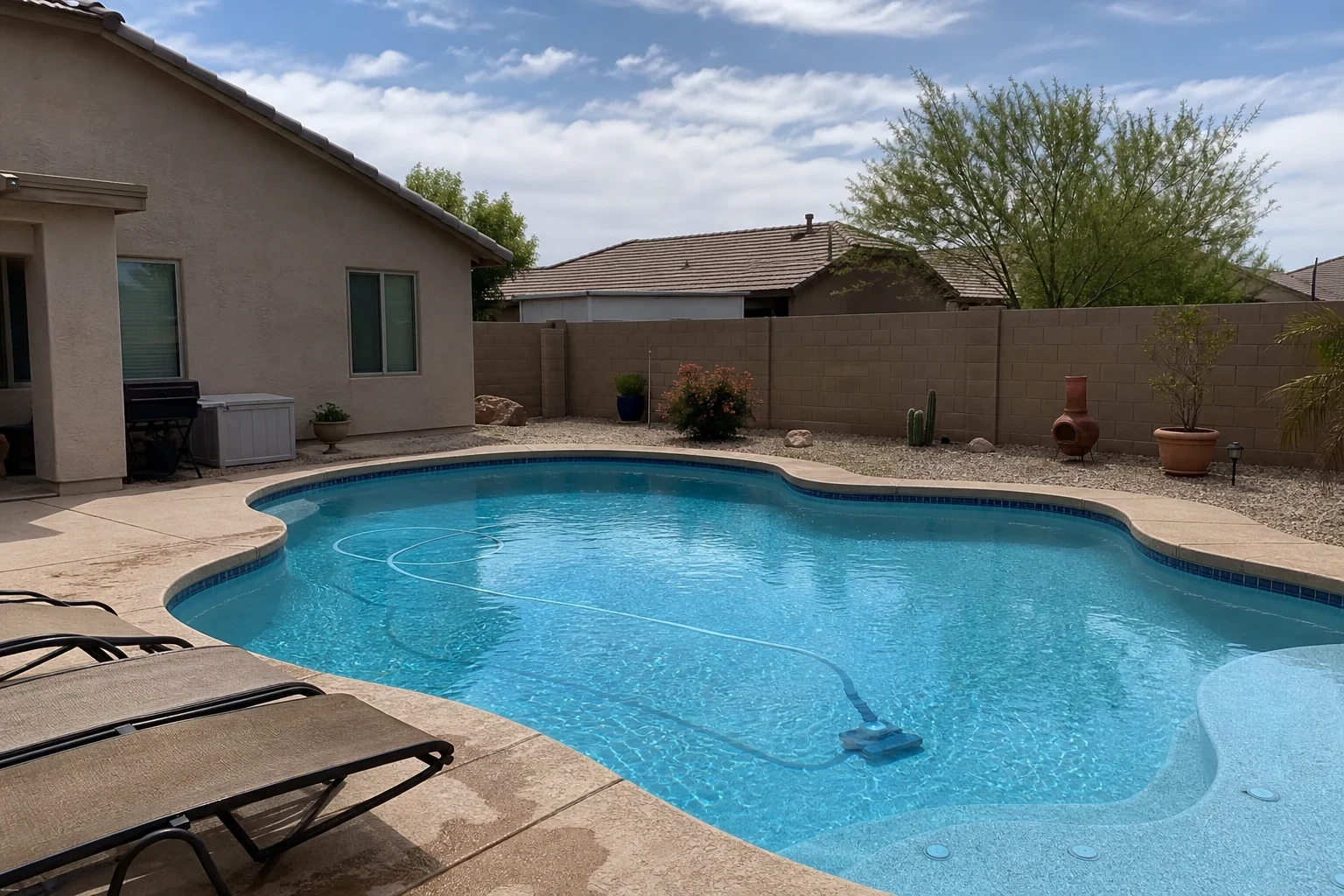
Talk through your equipment options
Tell us what's on your pad and what it's doing. We'll go over the choices and give you a free quote.